
 USA
 Malaysia
 Spanish
 Thailand
 Indonesia
 India
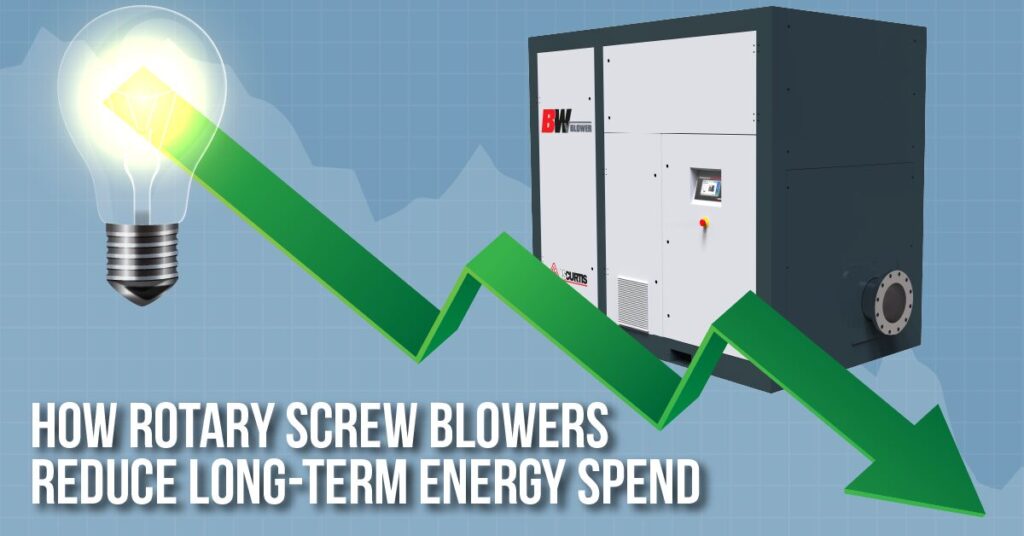
In modern manufacturing and processing facilities, compressed air and low-pressure blower systems are indispensable workhorses. They power everything from heavy-duty pneumatic conveying lines to critical aeration basins in wastewater treatment plants. However, these systems carry a hidden financial burden: they are often among the single largest consumers of electricity on the plant floor, accounting for a disproportionate share of an industrial facility’s monthly utility bills.
When engineering teams or procurement managers are tasked with specifying a replacement or upgrade, the initial focus naturally centers on capital expenditure—the sticker price of the equipment. But evaluating an investment based solely on upfront costs represents a fundamental miscalculation. Over the typical lifecycle of a continuous-duty air system, initial purchase and installation expenses account for only a small fraction of total cash outlays. The true driver of the total cost of ownership blowers generate is the electricity consumed month after month, year after year. To optimize long-term operational budgets, facilities must shift from a low-bid mentality toward maximizing energy efficiency. Specifying advanced rotary screw blowers, particularly oil-free, variable speed configurations, represents the single most impactful way to secure these long-term operational savings.
Why Energy Costs Dominate Total Ownership
To fully appreciate the economic advantages of modern technical designs, one must analyze the lifecycle breakdown of industrial air blower costs. Comprehensive industry data shows that electricity consumes roughly 75% to 80% of heavy-duty air system’s total financial lifecycle costs over ten years. Capital equipment purchase and routine maintenance make up the remaining 20% to 25% combined.
The 35% Efficiency Threshold: When operating at higher operational pressures, a high-efficiency rotary screw blower can deliver up to 35% energy savings compared to a traditional conventional lobe. This dramatic delta means that a premium, efficient system can completely offset its initial purchase differential within the first 12 to 24 months of full-scale operation.
Despite these clear numbers, many facilities operate in the dark regarding their current efficiency metrics. Legacy systems are frequently plagued by unchecked system pressure drops, piping friction losses, and component degradation that occurs gradually over time. Comprehensive industrial air audits and plant-wide benchmarking practices routinely uncover massive, unnecessary energy losses in older equipment. These audits reveal that many traditional blowers consume excessive power even during partial-load or idle periods, bleeding thousands of dollars annually in unoptimized utility costs.
The Efficiency Advantage of Rotary Screw Blowers
The core limitation of standard lobes lies in their external compression mechanics, which move air trapped between rotors without altering its volume until it meets system backpressure. In contrast, rotary screw blowers feature internal compression. As air enters the housing, the tight, interlocking helical profiles of the twin screws progressively reduce the internal volume of the pocket, discharging pre-compressed air smoothly directly into the system line. This design inherently reduces internal backflow, friction losses, and internal heat generation, allowing the machine to operate with superior efficiency at both maximum capacity and partial loads.
The efficiency curve improves even further when integrating a variable speed blower system. Industrial demands are rarely constant; processes fluctuate based on production schedules, shifting tank depths, or material densities. Traditional fixed-speed blowers respond to these shifts by wasting energy via atmospheric venting or continuous stop-start cycles that stress mechanical parts. A variable speed drive (VSD) system solves this by dynamically regulating motor RPM to mirror real-time demand variations.
Consider the FS-Curtis BWV Series as a prime example of an energy-efficient blower system. Designed for quiet, oil-free performance, the BWV Series delivers strictly certified Class 0 compressed air while maintaining highly stable energy metrics across its entire operational envelope. This consistent performance profile is vital for applications where contamination risk must be eliminated, including:
- Pneumatic Conveying: Smoothly moving sensitive bulk powders or granular products without friction heat or oil-induced clumping.
- Wastewater Treatment: Sustaining round-the-clock biological aeration tanks where energy draw can easily devour 50% of the entire municipal plant’s budget.
- Food & Beverage Production: Preventing oil contamination in packaging or process air lines to protect product integrity and recall liabilities.
Maintenance Costs: Another Hidden Factor
Beyond utility bills, ongoing maintenance represents another substantial long-term operational variable. When comparing the engineering of rotary screw architectures against alternative legacy options, the maintenance profiles diverge significantly.
Rotary screw blowers operate with significantly fewer physical wear parts. Because the internal helical rotors spin in a synchronized, non-contact manner, there are no internal rings, valves, or abrasive sliding components to degrade. This lack of contact translates directly into extended service intervals and minimized plant downtime. Furthermore, selecting oil-free blowers like the FS-Curtis BWV Series eliminates the ongoing cost of purchasing, disposing, and monitoring synthetic internal lubricants. More importantly, it eliminates the devastating operational risk of oil mist leaking down into process air pipes, which can ruin downstream products and require tens of thousands of dollars in line flushing and emergency decontamination procedures.
Real-World Savings Over Time
To contextualize these savings, consider a simplified, conservative five-year cost projection comparing a standard fixed-speed lobe blower against an energy-efficient rotary screw alternative like the FS-Curtis BWV Series. Assume a continuous 75 kW application operating 8,000 hours per year at a standard blended utility rate of $0.11 per kWh.
5-Year Lifecycle Cost Comparison
|
Expense Category
|
Standard Lobe Blower System
|
FS-Curtis BWV Rotary Screw
|
Net 5-Year Savings
|
|
Initial Purchase & Setup
|
$32,000 |
$48,000
|
($16,000) (Higher initial CapEx)
|
|
Cumulative Electricity Use
|
$330,000 |
$214,500 (35% Savings)
|
$115,500 |
|
Preventative Maintenance
|
$18,000 | $9,500 | $8,500 |
|
Total Lifecycle Outlay
|
$380,000
|
$272,000
|
$108,000 Net Savings
|
This representative model clearly shows how the initial capital premium of $16,000 is completely absorbed under a year of operation, yielding over $108,000 in cumulative net savings over five years. This baseline calculation does not even factor in localized utility rebate structures. Many modern energy providers offer substantial financial incentives and cash-back rebates for industrial customers upgrading to premium, high-efficiency machinery with integrated VSD systems, further compressing the payback horizon.
Frequently Asked Questions
- How much does a blower cost to run? A typical 75 kW blower running continuously can consume over $66,000 in electricity annually. True operating costs depend heavily on your local kWh rate, motor horsepower, and total annual running hours.
- What is the lifespan of a rotary screw blower? With proper maintenance, premium rotary screw blowers possess an operational life expectancy of 10 to 15+ years before requiring a major overhaul, far outlasting standard lobe options under heavy-duty cycles.
How to Evaluate Blower ROI Beyond the Price Tag
When assessing new blower equipment, plant leaders must build an expansive ROI framework that factors in the following operational variables:
- Calculated kWh Reductions: Factor your local utility’s peak and off-peak rate tiers against the specific load profiles of your facility.
- Maintenance Interval Schedules: Quantify the direct labor hours and consumable costs required to support the asset across its lifecycle.
- System Life Expectancy: Balance lower-cost, short-lived equipment options against the 10-to-15-year lifecycle durability of industrial-grade rotary screw rotors.
- Uptime and Risk Mitigation: Assess the financial costs of unplanned downtime, scrap product, or environmental non-compliance penalties.
Smarter Blower Investment Starts with the Right Technology
While the initial sticker price will always be a component of procurement discussions, an isolated focus on it is a long-term operational mistake. True financial responsibility focuses on energy consumption, mechanical reliability, and overall maintenance complexity over the complete lifecycle of the asset.
Upgrading to engineered rotary screw blower solutions, such as the FS-Curtis BWV Series, provides an optimal mix of whisper-quiet operation, absolute Class 0 oil-free safety, and market-leading energy efficiency. By investing in the right core technology today, industrial operations protect their bottom lines, insulate themselves against volatile energy markets, and ensure continuous productivity for years to come.
Ready to learn more about FS-Curtis’ BWV Blowers? Connect with your local authorized FS-Curtis Channel Partner.