
 USA
 Malaysia
 Spanish
 Thailand
 Indonesia
 India
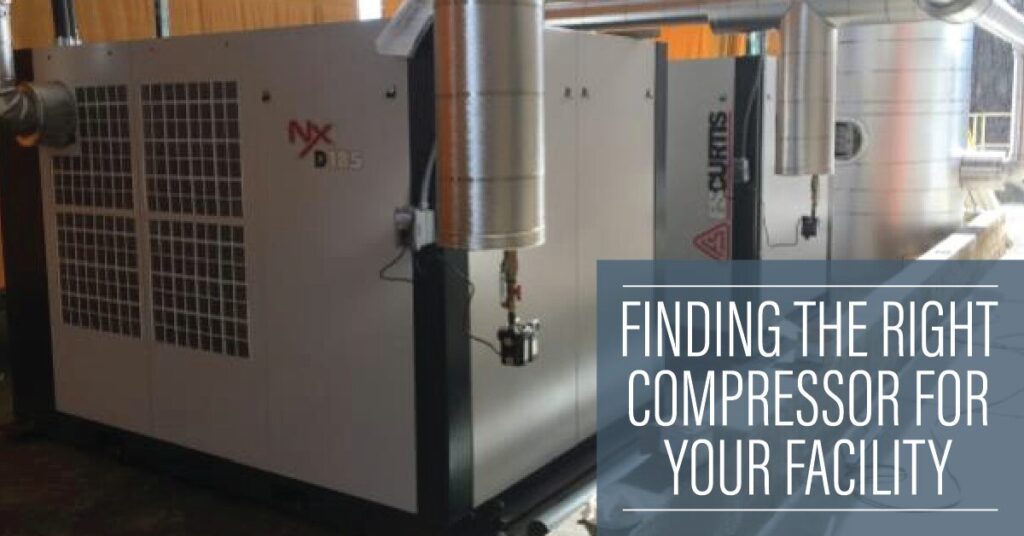
Investing in a compressed air system is one of the largest investments your company can make, and one of the most critical decisions you’ll make is choosing the right size for your facility. An undersized compressor may struggle to keep up with demand, leading to inefficiencies and downtime, costing your company money daily, while an oversized unit can be a waste of energy and resources and could cause costly repairs. Understanding your facility’s air pressure, air demand, and tank size requirements will ensure you select the right compressor to support your operations today and in the future.
Understanding Air Demand Requirements (CFM)
The first and most important step in sizing your air compressor is determining the air demand, measured in cubic feet per minute (CFM). CFM indicates the volume of air the compressor can supply per minute, making it a key factor in ensuring your equipment functions efficiently.
- Assess Your Equipment Needs: Different tools and machinery require different CFM levels. Some tools require constant CFM demand while others need intermittent demand.
- Account for Simultaneous Usage: If multiple tools will be used at once, calculate the total CFM demand by adding up their requirements.
- Plan for Growth and Seasonality: If your business is expanding or your business fluctuates throughout the year, consider selecting a compressor with a higher CFM capacity to accommodate future needs.
Understanding Air Pressure Requirements (PSI)
Another essential factor is determining the pounds per square inch (PSI) required by your equipment. PSI measures the force of compressed air, and different applications demand varying pressure levels.
- Check Equipment Specifications: Review the PSI ratings of the tools and machinery in your facility. Most industrial applications require 90-100 PSI, but some heavy-duty equipment may need higher pressure.
- Avoid Over-Pressurization: While it may seem beneficial to choose a compressor with a much higher PSI than required, excessive pressure can lead to unnecessary energy costs, premature wear on tools, and increased leaks.
Choosing the Right Tank Size
The size of the air compressor tank determines how long the unit can sustain air supply before needing to recharge. This is crucial depending on whether your operations require continuous air or occasional bursts. Choosing the correct size is dependent on the HP size of the compressor.
- Small Tanks (Under 60 gallons): Suitable for applications that require short bursts of air, such as brad nailers or small pneumatic tools.
- Medium Tanks (60-120 gallons): Ideal for workshops and mid-sized industrial settings where tools run intermittently.
- Large Tanks (Over 120 gallons): Best for heavy-duty applications and continuous-use scenarios, such as manufacturing lines and automotive shops.
Additional Considerations
- Horsepower (HP): While HP ratings impact a compressor’s power, it’s more important to focus on CFM and PSI to ensure the unit meets your specific needs.
- Duty Cycle: Consider how frequently the compressor will run. Units with a 100% duty cycle are designed for continuous use, while lower-duty cycles require rest periods. Rotaries are designed for 100% duty cycle and reciprocating units are typically at 60-70% max.
- Energy Efficiency: Selecting an energy-efficient compressor can reduce operational costs over time. Look for features like variable speed drive (VSD) technology to optimize energy consumption.
Let the Experts Help
At FS-Curtis, we have a team of factory-trained technicians and energy-certified channel partners across the country that can help you out. We will help you get the best system for your facility by evaluating air demand, pressure needs, and tank size.
Need help finding the right air compressor? Partner with an authorized FS-Curtis distributor to discuss your facility’s specific requirements!
Click here to download your handy dandy checklist guide for extra assistance!