
 USA
 Malaysia
 Spanish
 Thailand
 Indonesia
 India
Industrial air compressors are the backbone of many manufacturing operations, providing the necessary power to drive tools, machinery, and production processes. However, without proper efficiency measures and safety protocols, compressed air systems can become costly and hazardous. In this guide, we’ll explore the key strategies for optimizing air compressor efficiency while ensuring plant safety.
Maximizing Air Compressor Efficiency
- Routine Maintenance and Inspections
Regular maintenance is essential to keeping air compressors running at peak performance. Implementing a preventative maintenance schedule helps identify wear and tear, reducing downtime and costly repairs. Routine checks should include:
- Inspecting and replacing air filters
- Checking for air leaks
- Monitoring oil levels and changing lubricants as needed
- Examining belts and hoses for wear
- Minimizing Air Leaks
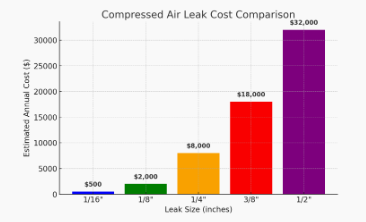
Air leaks are a major source of inefficiency in compressed air systems, with some studies showing that up to 30% of compressed air is lost due to leaks. Conducting regular system audits using ultrasonic leak detectors can help pinpoint and repair these leaks, significantly improving energy efficiency. Bar graph below pictures the cost impact of various air leak sizes over time.
- Optimizing Air Pressure Levels
Running compressors at higher-than-necessary pressure levels wastes energy. The higher the pressure, the greater the CFM loss at leak points, further increasing inefficiency. Evaluate system requirements and set the pressure to the lowest possible level needed to maintain production efficiency. Installing pressure regulators and using variable speed drive (VSD) compressors can further enhance performance.
- Utilizing Energy-Efficient Equipment
Investing in energy-efficient air compressors and components, such as two-stage rotary screw compressors or high-efficiency refrigerated air dryers, can lead to substantial cost savings. Additionally, heat recovery systems can repurpose waste heat from compressors to warm workspaces or preheat water, further reducing energy consumption.
- Proper Storage and Distribution
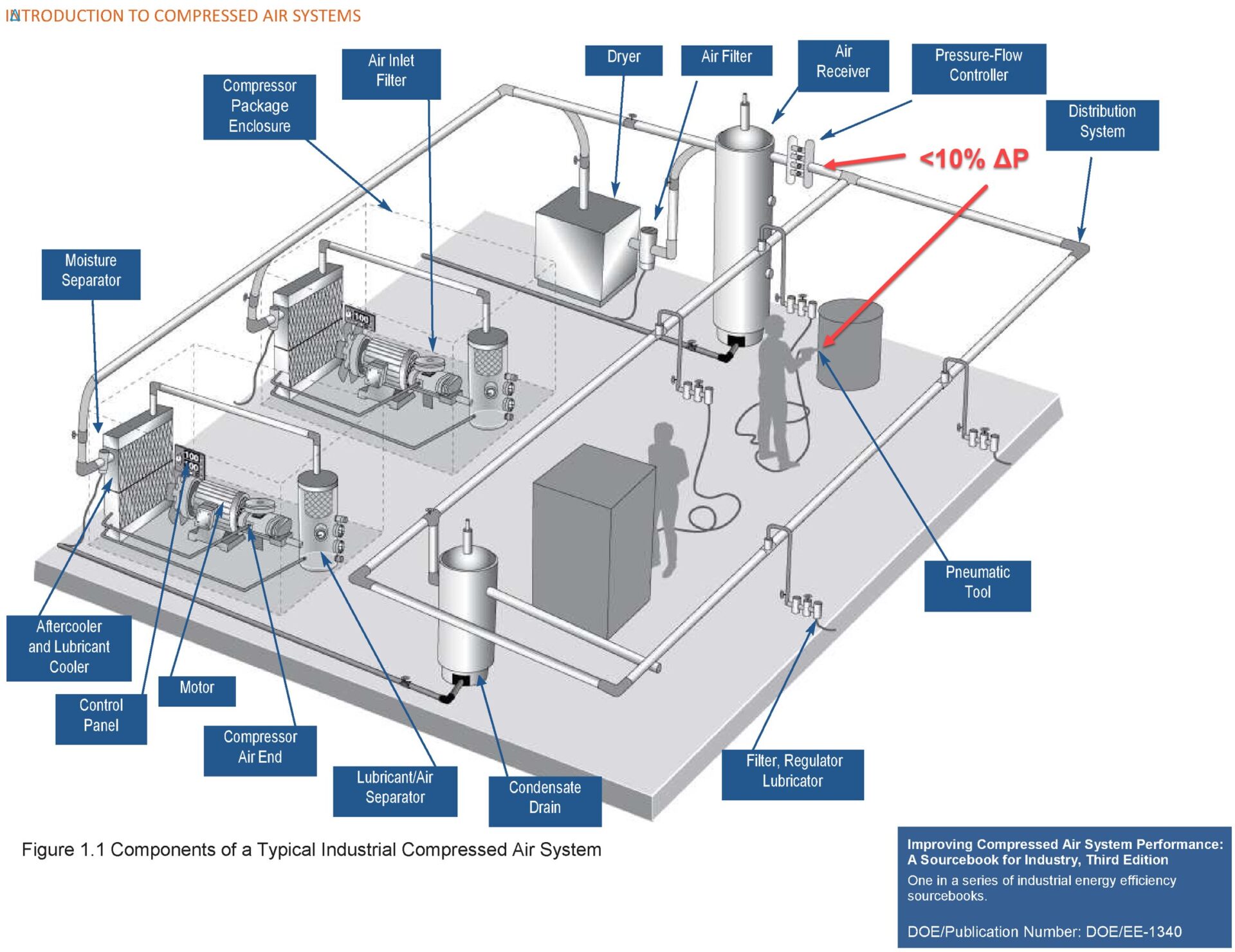
Adequate storage and well-designed piping systems are crucial for efficiency. Large storage tanks help stabilize air pressure and reduce demand peaks, while properly sized and maintained piping prevents pressure drops and ensures optimal airflow.
Enhancing Plant Safety with Compressed Air Systems
- Following OSHA and Industry Regulations
Regulatory compliance is critical to maintaining a safe working environment. Ensure that air compressor systems meet OSHA standards, including proper ventilation, noise control, and protective measures against over-pressurization.
- Training Employees on Safe Usage
Improper use of compressed air can result in serious injuries and costly repairs. All personnel should receive thorough training on safe operating procedures, including the risks of direct air exposure, proper PPE use, and emergency shutdown protocols.
- Installing Safety Valves and Monitors
Pressure relief valves, automatic shutoff controls, and air quality monitoring systems help protect both equipment and personnel from potential hazards, such as over-pressurization and contaminated air supply.
- Maintaining a Clean and Ventilated Workspace
Dust, moisture, and contaminants can compromise compressor efficiency and pose safety risks. Ensuring that compressor rooms are well-ventilated and free from moisture and debris will extend equipment life and create a safer work environment.
Conclusion
Efficiency and safety go hand in hand when it comes to industrial air compressors. By implementing proactive maintenance strategies, reducing air leaks, optimizing pressure settings, and prioritizing workplace safety, businesses can enhance performance while protecting their workforce. Investing in energy-efficient equipment and adhering to safety regulations ensures long-term savings and operational reliability.
For expert guidance on improving your compressed air system’s efficiency and safety, visit our website or contact us today!